
The ‘Enhanced Living’ Model in Senior Living Communities: The Length-of-Stay Multiplier
Published on April 3, 2026 by Anna from Aaniie
Across the senior living industry, communities are embracing more flexible, resident-centered care models designed to support people – not just at one stage of life, but across a longer, more continuous journey.
As residents’ needs change naturally over time, expectations shift too. Some things, though, remain constant: families want continuity. Residents want familiarity. And operators want to deliver higher-quality care without unnecessary disruption.
This is where the “Enhanced Living” model comes into focus.
By expanding services and supporting residents in place, communities can extend length of stay while preserving the experience that makes their environment feel like home.
And when care delivery, staffing, and operations are aligned to support that model, length of stay becomes more than a metric. It becomes a multiplier for both resident outcomes and long-term performance.
Smarter Insights. Better Decisions. Stronger Operations.
With Aaniie Intelligence, you don’t just run your business.
You improve it – every day.
Discover Aaniie Intelligence now →
At the heart of it all: Continuity, comfort, and human connection
Fundamentally, senior living is about people and relationships that build over time. Residents thrive when they experience:
- Consistent caregivers who understand their needs and preferences
- Daily routines that feel stable and reassuring
- A sense of belonging within their community
As care needs evolve, remaining in the same environment can play a powerful role. It supports emotional well-being, strengthens relationships with caregivers and staff, and allows residents to maintain a sense of independence and dignity.
For families, that continuity brings peace of mind. There’s reassurance in knowing that care can adapt without requiring disruptive transitions or relocation.
This is the essence of Enhanced Living. It’s not just extending the length of stay. It’s about enriching the experience within it and preserving continuity of life.
The “enhanced living” model, explained

The Enhanced Living model (sometimes called the “Enhanced Supported Living model”) is designed as a flexible bridge between independent and assisted living. It supports residents who value independence but may benefit from lighter-touch, on-demand services that evolve over time.
Often delivered within an apartment-style setting, this model allows residents to access support such as housekeeping, meals, and personal care services – without requiring full-time, 24-hour skilled nursing. Instead of a fixed level of care, residents can choose and pay for only the services they need, when they need them.
In practice, this allows communities to:
- Introduce on-demand personal care and support services within the same environment
- Adapt services gradually as resident needs evolve
- Maintain independence while offering additional layers of support when required
→ For residents, this means greater flexibility, autonomy, and continuity of lifestyle.
→ For communities, it supports longer stays, stronger relationships, and a more responsive service offering.
However, delivering this model successfully requires more than intent. It depends on the ability to introduce services seamlessly, coordinate care effectively, and maintain visibility across each resident’s evolving needs.
The length-of-stay multiplier – and why it matters
From an operations perspective, length of stay is one of the most important drivers of performance in senior living because, when residents stay longer, communities benefit from:
- Higher lifetime resident value
- More predictable and stable revenue
- Improved occupancy consistency
- Stronger reputation and satisfaction among residents and families
Even modest increases in average length of stay can create a compounding impact over time.
This means that Enhanced Living, as well as being a care model, can also function as a strategic lever.
It enables communities to support residents through changing needs – without disruption – so they unlock better outcomes and more sustainable growth.
Expanding services without disrupting care
One of the defining strengths of the Enhanced Living model is the ability to expand services seamlessly. For instance, communities can:
- Introduce HCBS and personal care services within existing resident relationships
- Respond to changing needs without requiring relocation
- Deliver care on demand, 24/7/365
But again, operationally, this requires coordination.
Scheduling must align across different types of care. Teams need visibility into resident needs and service delivery. And, critically, new services must integrate with the systems communities already use and depend upon.
For many organizations, that means connecting on-demand and other personal care services with senior living platforms like PointClickCare, allowing resident data to flow naturally between systems. This kind of integration supports smoother referrals, reduces lead times to initiate care, and simplifies downstream processes like invoicing.
Ultimately, business expansion is only sustainable when care delivery remains coordinated, consistent, and easy to manage.
Smarter care coordination drives better outcomes
As residents’ needs evolve, coordination becomes increasingly important.
With connected systems and real-time visibility, enabled in part by platforms like Aaniie, care teams gain the ability to:
- Track resident wellbeing continuously
- Adjust care plans proactively as needs change
- Ensure no gaps in service delivery
When information flows between systems (rather than sitting in silos), care managers, caregivers, and administrative teams stay aligned and in harmony. This reduces delays, minimizes miscommunication, and creates a more responsive care environment.
As a result, day-to-day operations become smoother, and resident outcomes improve.
Workforce alignment enables continuity of care
Delivering Enhanced Living effectively brings new opportunities for care, but also requires a thoughtful approach to staffing.
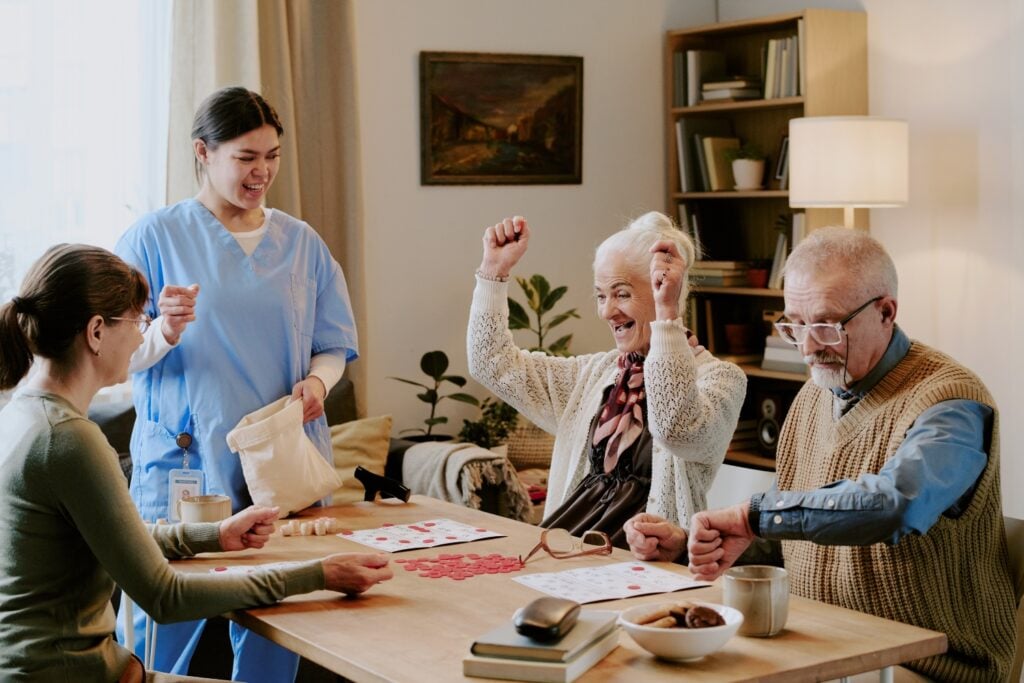
As residents’ needs evolve, communities must balance caregiver availability across different levels of care, while still preserving something deeply important: consistency.
This manifests in things like familiar faces, trusted relationships, and the small, human details that make care feel personal.
This is where workforce alignment matters – more than simply filling shifts, it’s about matching caregivers and residents in a way that considers skills, preferences, personality, communication style, and familiarity over time.
For example, imagine a resident who has begun to need additional personal care support. Rather than introducing an entirely new caregiver, the community is able to extend services through someone they already know and trust – someone who understands their routines, their preferences, and the little things that make them feel comfortable.
That continuity changes the experience entirely.
With intelligent scheduling and caregiver matching in place, this kind of alignment becomes much easier to achieve. Care feels more natural and personalized, caregivers feel more confident and supported in their roles, and residents experience a deeper sense of trust and stability.
In short, continuity isn’t only operational: it’s emotional. The more consistent the caregiver experience, the more meaningful and reassuring the care relationship becomes over time.
Reducing administrative burden to increase care presence
Administrative responsibilities will inevitably grow as services expand – however, when workflows are connected across systems, much of that complexity is eliminated naturally.
Scheduling, service delivery, and financial processes align seamlessly. Data flows between systems, instead of being manually re-entered. Administrative teams spend less time reconciling information.
For caregivers, this translates into:
- Simpler documentation processes
- Easier access to schedules and care details, even on mobile (highly important to caregivers for efficiency and convenience)
- Less time spent on administrative tasks
Ultimately, when administrative load decreases, caregivers have more time and energy to focus on residents; to be present, attentive, and engaged.
Visibility that supports smarter decision-making
Enhanced Living requires ongoing, 360° awareness across operations. Real-time insights help communities understand:
- How services are being delivered and utilized
- Where staffing adjustments may be needed
- How operational performance is trending
With clear visibility, leaders can:
- Identify opportunities to improve efficiency
- Adjust proactively as needs change
- Ensure services remain aligned with resident expectations
This level of awareness supports more confident decision-making, and allows communities to scale Enhanced Living with clarity.
Engagement, satisfaction, and retention improve together

When Enhanced Living is implemented thoughtfully, the impact is felt across the entire community – not just in operations, but in everyday experience.
For residents and their families, this shows up as clarity and reassurance. Care feels more transparent, communication is consistent and easy to follow, and there’s a growing sense of trust – built on the knowledge that everything is connected, coordinated, and reliable.
At the same time, caregivers gain a sense of fulfillment. They feel recognized for their work, supported in their roles, and connected to the wider team around them. With tools like Caregiver Rewards improving retention, and clear communication built into daily workflows, expectations are easier to understand, and contributions are acknowledged in meaningful ways.
Crucially, there is a compound effect at work here. These outcomes don’t exist in isolation – they reinforce one another.
When caregivers feel valued, retention trends upwards. When caregivers stay, relationships with residents deepen. And as those relationships grow stronger, care becomes more intuitive, more personal, and more consistent.
That continuity is what elevates the entire experience.
It strengthens satisfaction for residents and families, supports a more stable and engaged workforce, and ultimately contributes to longer, more meaningful stays within the community.
Moving from care model to growth strategy
When supported by the right infrastructure, introducing Enhanced Living becomes more than a care approach. It becomes a growth strategy.
Communities move from:
- Reactive care delivery → proactive, coordinated care
- Disconnected systems → connected, integrated operations
- Short-term occupancy focus → long-term resident value
In this model:
- Residents stay longer
- Care quality remains consistent as needs evolve
- Operations remain efficient and scalable
And importantly, growth happens without compromising the experience that defines the community.
Unlock the full potential of enhanced living
Enhanced Living represents a meaningful shift in how senior communities deliver care. It prioritizes continuity, personalization, and long-term relationships, while creating new opportunities for operational and financial stability.
Its success depends on the ability to coordinate care, workforce, and systems seamlessly.
With the right infrastructure in place – including embedded platforms like Aaniie, that connect home care services with existing systems such as PointClickCare – communities can expand their capabilities without adding unnecessary complexity.
Teams gain the visibility they need to operate confidently, caregivers are supported more effectively, and residents enjoy greater consistency, familiarity, and higher-quality care.
In this way, length of stay becomes a multiplier for both resident well-being and for long-term community success.
Expand services, strengthen continuity, and extend length of stay with Aaniie.
Request a free demo or talk to our team today
