
Subscription Payment Models to Support Recurring Revenue: What Babysitting Agencies Need to Know
Published on May 18, 2026 by Anna from Aaniie
As competition from childcare marketplaces, on-demand babysitting apps, and gig-style caregiver platforms continues to grow, many babysitting agencies are looking beyond traditional booking models to create more stable, sustainable ways to expand their business.
Families increasingly value convenience, reliability, and ongoing access to trusted caregivers, while agencies face growing pressure to improve operational efficiency, strengthen client retention, and build more predictable revenue streams in an increasingly competitive market.
In addition, shifting consumer habits and the wider growth of subscription-based services across many industries are influencing how modern babysitting agencies think about service delivery, client relationships, and long-term business growth.
In this article, we explore how subscription payment models work in the babysitting industry, the different ways forward-thinking agencies are structuring their offerings, and why recurring revenue models are becoming increasingly attractive.
We also look at some of the key operational, staffing, and client-retention considerations that agencies need to evaluate before deciding whether a subscription-based approach is the right fit for their business.
What is a subscription payment model for babysitting agencies?
A subscription payment model for babysitting agencies is a membership-style business model in which families pay a recurring fee – usually monthly – for ongoing access to babysitting services or childcare-related benefits.
Rather than relying entirely on hourly, ad hoc bookings and individual transactions, subscription models can support more strategic pricing structures to help agencies better balance operational costs while strengthening long-term client value.
For babysitting agencies, this provides a more predictable revenue stream while also helping to simplify financial planning, aid client retention, and build a more sustainable business over time.
For families, advantages include greater cost predictability, priority access to trusted sitters, and a more reliable childcare experience overall – bringing added convenience and peace of mind.
Importantly, adopting a subscription model does not have to mean replacing traditional pay-as-you-go services altogether. Many agencies choose a hybrid approach, introducing membership-style options alongside their existing booking model to gradually test demand and build recurring revenue over time.
Key components of a subscription model for babysitting services

While every babysitting agency will structure its subscription offerings differently, most models include a combination of the following components:
- Automated recurring payments – families are automatically billed a fixed fee at set intervals (monthly, quarterly, or annually), for a defined level of booking access, childcare hours, or membership benefits
- Ongoing access to trusted, pre-screened sitters – families are connected with a reliable pool of vetted, background-checked babysitters
- Flexible membership tiers or packages – families can choose different levels of service, booking access, or babysitting hours based on their needs and budget
- Value-added services and membership benefits – such as priority matching, discounts, or enhanced back-up and specialized care options
- Clear membership terms and service guidelines – outlining how the subscription works, including refunds, renewal terms, benefits included, and any usage limits or fair-use expectations
- Separate membership and babysitter fees – in some models, subscriptions cover access to extra services and benefits, while sitter fees are billed separately per booking completed
This flexibility is just one reason why subscription models are becoming increasingly attractive to babysitting agencies. Rather than following a one-size-fits-all approach, agencies can tailor their membership structure to fit their services, target families, and long-term business goals.
Common types of subscription models for babysitting agencies
Some of the most common ways babysitting agencies structure their subscription or membership-based offerings include:
Recurring flat-rate membership model
Families pay a fixed monthly, quarterly, or annual fee for access to babysitting services, priority booking, or a set level of ongoing childcare support and benefits. This model works well for families who need regular, predictable childcare.
Bulk credit or prepaid hour packages
Families pre-purchase a set number of babysitting hours in advance (for example, 50 booking credits), which they can then draw from over a set period. This provides flexibility while still giving agencies upfront revenue stability.
Tiered service subscription model
Families choose from different subscription levels – for example, bronze, silver, or gold – depending on their unique childcare needs and budget. Each tier offers varying levels of support, booking flexibility, continuity of care, and access to additional services or specialized/experienced sitters.
Corporate or employer-sponsored back-up childcare subscriptions
Where businesses provide subsidized or fully funded back-up childcare as part of their employee benefits, the payment structure can resemble a subscription model. For example, employers may contract with a sitter agency and pay a monthly retainer or pre-funded package to guarantee availability of a set number of days or ‘booking credits.’
Hybrid subscription models
A combination of membership access and pay-as-you-go bookings, allowing families to subscribe for benefits and priority access while still paying separately for occasional or ad-hoc care.
While each approach differs in how services are packaged and delivered, subscription models are ultimately designed to create greater reliability and consistency for both families and babysitting agencies alike.
Why more babysitting agencies are adopting subscription payment models

As babysitting agencies respond to a more competitive and fast-changing childcare market, subscription payment models are increasingly being adopted for the operational and business advantages they can offer. Benefits include:
- More stable, predictable revenue stream – supporting healthier cashflow, improved forecasting, and long-term business planning
- Higher customer lifetime value (CLV) – creating more consistent, recurring revenue compared to one-time or pay-as-you-go bookings
- Simplified billing and payment cycles – shifting from multiple per-booking transactions to a single monthly payment structure, making invoicing easier to manage and systemize
- More accurate staffing and scheduling decisions – helping agencies better forecast demand, optimize caregiver availability, and manage workforce capacity more efficiently
- Improved sitter satisfaction and retention – helping to create steadier booking demand, more predictable income opportunities, and stronger agency relationships
- Enhanced client loyalty and retention – encouraging families to return regularly and rely on the agency for their ongoing childcare needs
- Improved data insights – using subscription data to better understand family needs, personalize services, improve satisfaction, and identify opportunities for additional support or premium offerings
- Greater opportunities to grow client base – attracting parents looking for consistent quality, safety, and highly compatible caregivers (that many on-demand platforms are unable to provide)
- Enhanced brand value and competitive differentiation – helping agencies stand out by offering premium membership benefits like priority booking, preferred sitter matching, and back-up care access
- Easier business scalability – allowing babysitting agencies to grow and respond to market changes more easily, without major operational expansion or requiring significant upfront investment
Taken together, these benefits illustrate why subscription models are becoming an increasingly attractive option for babysitting agencies looking to build more stable and scalable businesses. But is it the right approach for your agency?
Simplify recurring billing with secure payment tools built for home care providers.
Is a subscription payment model right for your babysitting agency?
If your babysitting agency is looking for more predictable revenue, stronger client retention, and fewer cashflow fluctuations, a subscription payment model may be worth exploring.
However, like any business model, it won’t be the right fit for every agency.
Successful implementation requires careful planning, operational readiness, and the ability to consistently deliver a high-quality childcare experience.
Before introducing a subscription offering, it can be helpful to step back and review a few key areas within your agency:
1. Is there enough demand from your client base to support a subscription model?
It’s important to assess whether there’s sufficient, consistent demand for ongoing babysitting services to support a subscription payment model in the long term – and whether families would realistically commit.
This demand may come from your existing client base, but can also be influenced by your agency’s ability to attract new families looking for reliable, recurring childcare.
Being able to build and maintain a strong subscriber base is essential to generating the recurring revenue and financial stability needed to make the model successful and sustainable over time.
2. Does your agency have enough caregiver capacity to deliver recurring childcare services consistently?

Staffing capacity is a key factor when considering a subscription model, as your agency needs a strong and reliable pool of vetted sitters to meet ongoing, increasing demand.
This includes having enough sitter availability to support both regular bookings and potential last-minute requests, including back-up care, which may require recruiting and onboarding additional caregivers as your agency grows.
It’s also important to consider your caregiver retention strategy to support continuity of care as much as possible – as families enrolled in subscription plans often have higher expectations around consistency with familiar, trusted sitters.
3. Does your agency have the systems and infrastructure in place to manage subscriptions efficiently at scale?
Subscription models rely heavily on strong operational systems, particularly as your membership base grows. While manual processes may work in the early stages, managing subscriptions at scale requires more reliable and automated infrastructure.
Key areas to review include:
- scheduling and booking management
- family–caregiver matching
- billing and payment processes
- client and sitter communication channels
- data security management
Consider researching software solutions with built-in automation – if you don’t already have these in place – as they can significantly reduce manual workload in these areas. This can support more efficient management of higher subscriber volumes without increasing administrative workload.
Many agencies find that an integrated childcare management platform is more effective than relying on multiple disconnected systems, helping to reduce administrative complexity, minimize errors, and improve the overall client experience as demand increases.
4. Can you clearly define a subscription offering that is valuable for families and sustainable for your agency?
A successful subscription model depends on having clearly defined offers that work for both families and your agency. This means being specific about what your subscription plans will include, how they’ll be structured, and what additional value families can expect in return for their ongoing payments.
Clarity upfront is essential for both service delivery and pricing. Families need to understand exactly what they are signing up for – whether that includes priority booking access, a set number of childcare hours, enhanced sitter matching, or access to additional support features.
At the same time, your babysitting agency needs to know the model can feasibly be delivered – especially as demand grows – with pricing and service levels aligned with your operational capacity and long-term business goals.
Understanding what competing childcare providers offer — and whether your existing families would value a membership-style service — can help inform how realistic and competitive your subscription plans are.
Setting clear expectations from the outset is essential for building trust, reducing confusion, and laying a stable foundation for a successful subscription model.
5. Is your agency prepared for managing ongoing member relationships and retention?

Subscription models shift the relationship between babysitting agencies and families from occasional bookings to an ongoing service experience. As a result, families paying a recurring fee will typically expect a higher level of consistency, responsiveness, and overall support from your agency.
This includes being able to provide reliable booking experiences, timely communication, accurate billing, and continued access to trusted caregivers who align with a family’s preferences and childcare needs over time.
To meet these expectations, your agency needs systems and processes in place to support ongoing engagement with subscribing families. This may include using childcare management software, a family portal, or a mobile booking app to streamline communication, improve booking visibility, and support a more seamless client experience.
From a retention perspective, success depends on your agency’s ability to actively nurture these ongoing relationships rather than simply maintaining them. For example, this may involve regularly monitoring family engagement and satisfaction to help identify households that aren’t actively using the service or are showing early signs of disengagement.
Taking a proactive approach in these situations is key to reducing cancellations and improving long-term retention, whether through additional support, re-engagement communication, or offering more flexible options such as adjusted service tiers as families’ needs evolve.
For many agencies, a hybrid approach can be the most practical, lower-risk starting point, allowing you to introduce subscription-based services alongside existing pay-as-you-go bookings before expanding further.
Building a more resilient babysitting agency for the future
For babysitting agencies looking to create stronger client relationships, improve sitter retention, and build more predictable recurring revenue, subscription-based services can offer an exciting opportunity.
Whether you choose to introduce a fully subscription-based model or start with a more flexible hybrid approach, success ultimately depends on having the right operational foundations in place to support both families and caregivers consistently as your agency grows.
Having an integrated childcare management platform in place can play an important role in supporting that growth – helping your agency streamline bookings, automate recurring billing and payments, improve family communication, safeguard client data, and reduce administrative complexity as demand increases.
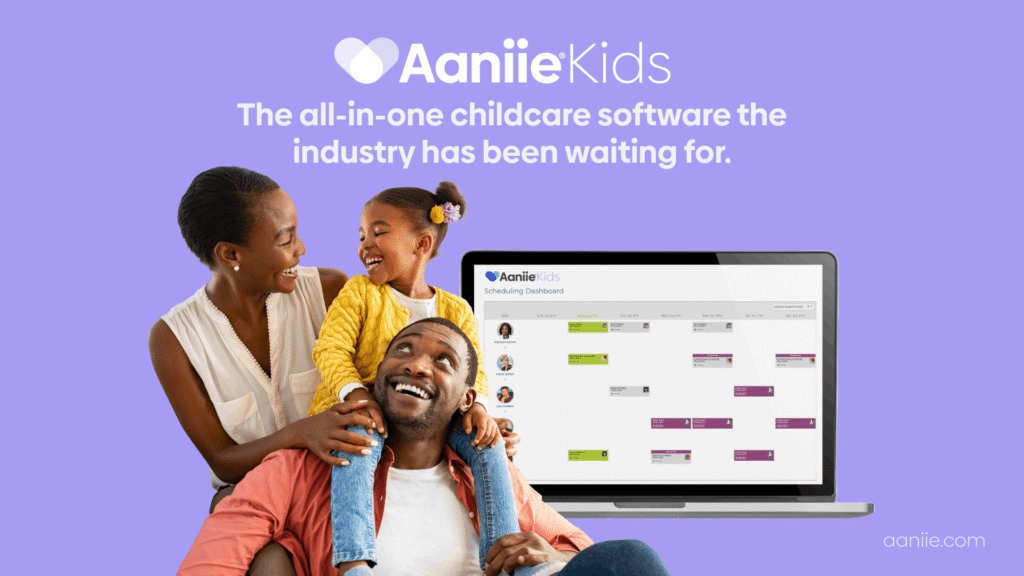
If you’re exploring how subscription models could work within your own agency, now may be the right time to review whether your current systems are truly built to support scalable, recurring service delivery. A purpose-built solution like Aaniie Kids can help bring these elements together, supporting your agency as it moves toward more efficient, connected, and client-focused operations.
With the right foundations in place, subscription models can become more than just a pricing structure – they can help shape a more resilient, successful future for your babysitting agency.
